

Sustainability · 2025
In this section51 topics
- Sustainability Policy3 items
- Sustainability Goals & UN SDGs3 items
- Policy Review2 items
- Business Value Chain1 item
- Stakeholder Analysis1 item
- Environmental Sustainability — Overview1 item
- Environmental Policy & Guidelines3 items
- Environmental Policy Review3 items
- Energy — Plan & Guidelines2 items
- Energy — Electricity Consumption1 item
- Energy — Fuel Consumption1 item
- Energy — Targets2 items
- Energy — Performance & Outcomes2 items
- Water — Plan & Guidelines2 items
- Water — Withdrawal, Discharge & Consumption1 item
- Water — Targets2 items
- Water — Performance & Outcomes2 items
- Waste — Plan & Guidelines2 items
- Waste — Generation, Disposal & Recycling1 item
- Waste — Targets2 items
- Waste — Performance & Outcomes2 items
- GHG — Plan & Guidelines2 items
- GHG — Emissions1 item
- GHG — Emissions Verification3 items
- GHG — Principles & Standards1 item
- GHG — Targets1 item
- GHG Targets — Net Zero1 item
- GHG Targets — Carbon Neutrality1 item
- GHG — Performance & Outcomes2 items
- Environmental Legal Incidents1 item
- Social Policy & Guidelines3 items
- Social Policy Review3 items
- Social — Principles & Standards Practised1 item
- Human Rights Due Diligence2 items
- Employees — Plan & Guidelines3 items
- Employees — Workforce1 item
- Employees — Remuneration & Provident Fund1 item
- Employees — Training & Development1 item
- Employees — Occupational Health & Safety1 item
- Employees — Labour Relations1 item
- Employees — Employee Representation2 items
- Employees — Targets2 items
- Employees — Performance & Outcomes2 items
- Customers — Plan & Guidelines3 items
- Customers — Satisfaction Results1 item
- Customers — Targets1 item
- Customers — Performance & Outcomes2 items
- Community & Social — Plan & Guidelines1 item
- Community & Social — Targets2 items
- Community & Social — Performance & Outcomes2 items
- Law Violation Incidents1 item
Sustainability Policy
Has a Sustainability Policy
Yes
Policy Description
Taokaenoi Food & Marketing Public Company Limited (the “Company") has a sustainability policy that aligns with its vision to become an innovative food company that brings happiness to consumers worldwide. The Company aims to deliver value to consumers as "products" that have "innovation", as well as creating a culture of consumption that adapts to the times. The Company also aims to deliver other values to stakeholders through rewards and value from collaboration, including creating valuable products for consumers, designing environmentally-friendly production process, building relationships with surrounding communities, or collaborating on research and development on raw material resources with raw material producers. The Company is concerned about the value chain of the business from upstream to downstream as follows:
Upstream: Move forward with stakeholders who are business partners
Considering the business process, it is apparent that every step of the operation from upstream to downstream involves the Company’s stakeholders. Therefore, it is essential to move forward together with stakeholders, especially our business partners. The Company is committed to conducting its business with fairness, building engagement, and delivering value for each other. These efforts are to ensure that our business partners are proud to be part of the process of delivering the value of "Taokaenoi" products to consumers.
Main raw material suppliers: The Company strives to collaborate with seaweed manufacturers to develop the main raw material, raw seaweed, to increase production and minimize environmental impact. The Company aims to develop a seaweed species that provides higher yield with better quality.
Raw material and packaging suppliers: The Company aims to promote and select producers of raw materials and packaging that have environmental friendly production process and adhere to the principle of fair trade.
Along the way: Every employee contributes to delivering happiness to consumers.
Every employee is the person who drive the Company’s sustainable growth. The Company promotes awareness of sustainable development among all employees, focusing on understanding the impact on society and environment and how it affects everyone's well-being. When all employees realize the outcome of sustainable operation, it results in well-design products ready to be delivered to consumers with pride.
The Company promotes a sense of corporate bonding to encourage employees to feel that they are part of our growth. The Company's policy is to continuously develop its personnel, with fair assessment system, reasonable incentive, and reasonable welfares.
Promoting understanding toward sustainability: The Company has made the sustainable development a key performance indicator for executives from director-level and higher in all departments to encourage sharing with the entire corporation and stakeholders from upstream to downstream.
Along the way: Environmentally friendly production process and products, and the search for alternative innovation for sustainability
At present, most of the raw materials used in the food industry come from nature. Adopting production processes that have minimal impact on the environment and nature will help to maintain the sustainable growth of our business. Recognizing that nature and environment facilitate growth, the Company aims to develop modern production processes that reduce waste emissions to nature, including wastewater treatment, reducing waste during production, or seeking alternative energy sources, such as solar cells, for production process. The Company also participates in assessments for various production standards, such as ISO and BRC, to build trust among stakeholders and affirm that our products deliver value to the environment, as well as great taste and nutrition.
Due to limited resource, global uncertainty, emerging risks such as COVID-19 pandemic, heat waves and many more events that could damage agricultural products and may lead to shortages, the Company has a policy to study variety of alternative resources, including innovation such as plant-based foods and packages made from environmentally-friendly materials. This approach allows the Company to diversify its business while adhering to the Company's vision to become the world food innovation company.
Downstream: Enhancing value, experience and consumption of our products with happiness
The core of the Company’s business is to deliver innovative products and offer the experience of having good food to consumers, which includes happiness of consumption, nutrition, and product safety. The Company emphasizes the research and development to incorporate modern technology into production process and to deliver products to consumers. We also strive to communicate to consumers the value of our products toward society and environment. It is our endeavor to make our consumers proud to be part of consuming good food that benefits not only themselves but also society and the environment.
Preparing sustainability plan and strategy
Taokaenoi and stakeholders are aware of various issues related to sustainability, whether they are short-term, medium-term, or long-term. These issues covers environmental, social, and governance dimensions with the aim of creating sustainability and fostering a culture of corporate sustainability. The Company has developed a strategy to achieve the Sustainable Development Goal (SDGs) following the international principles established by the United Nations. The SDGs are focused on 3 aspects namely economy, society, and environment to ensure effective corporate sustainability. To achieve the corporate sustainability, the Company supports activities within the value chain and upholds good corporate governance principle, connecting the entire business chain.
The Company has appointed a working group for sustainability operations to implement the established plan and strategy, to achieve the set targets. The Company has analyzed and identified major stakeholders, important issues and their priority every year to determine the sustainability operation approach for corporate sustainability.
Policy Document Link
https://investor-th.taokaenoi.co.th/sustainability_management_policy.html
Sustainability Goals & UN SDGs
Has Sustainability Goals
Yes
Goals Description
The Company has established sustainability management goals aligned with its business strategies in both the short and long term, aiming to achieve business growth while simultaneously promoting environmental stewardship, social responsibility, and good corporate governance. This approach is intended to create balanced and sustainable value for all stakeholders.
The Company has established quantitative targets in various areas to guide its operations and enable continuous monitoring of progress (further details are provided under the sections on Environmental Sustainability Management and Social Sustainability Management). These targets include initiatives such as reducing energy consumption, lowering greenhouse gas emissions, reducing water usage, minimizing waste and waste generation, providing fair compensation, developing employee capabilities, promoting employee engagement and relationships, and ensuring occupational health and safety, among others.
In addition, the Company focuses on enhancing operational efficiency, optimizing resource utilization, developing product innovation, and conducting business with transparency and good governance, in order to support sustainable growth and strengthen the Company’s long-term competitiveness.
UN Sustainable Development Goals
| SDG Goal |
|---|
| Goal 3 Good Health and Well-being |
| Goal 5 Gender Equality |
| Goal 8 Decent Work and Economic Growth |
| Goal 9 Industry, Innovation and Infrastructure |
| Goal 12 Responsible Consumption and Production |
| Goal 13 Climate Action |
| Goal 17 Partnerships for the Goals |
Policy Review
Policy Reviewed This Year
No
Policy Changed This Year
No
Business Value Chain
Value Chain Description
The Company's main business is the manufacture and distribution of seaweed snacks and other types of snacks. The business value chain begins with the main raw material source, which comes from seaweed farms that are cultivated in deep seawater. The seaweed is then processed into dried seaweed by processors and sent to the Company's factory to be processed into various types of seaweed snacks, such as fried seaweed, roasted seaweed, baked seaweed, and tempura seaweed. The Company's products are then distributed to distributors both domestically and internationally, through modern trade and traditional retail stores, as well as online channels, before reaching consumers.
In addition, the Company also works with partners to organize promotional activities for Taokaenoi products to make them more accessible to consumers. This starts with focusing on creating value in products and services to meet customer needs, cooperating with business partners, caring about resource use, production, management, providing access to distribution channels for consumers, and managing after-sales products.
Stakeholder Analysis
Stakeholder Analysis
| Stakeholder Type | Stakeholders | Stakeholder Expectations | Response to Expectations | Communication Activities |
|---|---|---|---|---|
| External stakeholders | 2913 · Description: Shareholders | o Good return on investment
o Company's performance and continuous, stable growth
o Providing equal opportunities to shareholders and protecting their interests
o There are systems in place for auditing, good corporate governance, and risk management in the business operations. | o Pay dividends to shareholders in proportion to the Company's performance and policy
o Govern the Company in a transparent, fair and auditable manner
o Appoint an investor relations officer to provide accurate information and build relationships with shareholders
| 2939 · Description: Press Release · 2941 · Description: Online Communication · 2944 · Description: Annual General Meeting (AGM) |
| Internal stakeholders | 2921 · Description: Employees | o Fair treatment
o Respect for human rights
o Safe and healthy working conditions
o Opportunities for employees to learn and develop
o Other employee benefits
| o Pay fair wages and conduct performance evaluations fairly
o Respect human rights and equality
o Provide appropriate benefits, including compliance with labor laws
o Provide a suitable working environment
| 2941 · Description: Online Communication · 2942 · Description: Internal Meeting · 2945 · Description: Complaint Reception · 2946 · Description: Employee Engagement Survey · 2948 · Description: Training / Seminar |
| External stakeholders | 2923 · Description: Customers | o Product value
o Delicious taste
o Product quality and brand awareness
| o Offer quality and innovative healthy food products to consumers
o Take responsibility for products
o Accurate product information disclosure
| 2939 · Description: Press Release · 2941 · Description: Online Communication · 2945 · Description: Complaint Reception · 2947 · Description: Satisfaction Survey |
| External stakeholders | 2899 · Description: Suppliers | o Fair and transparent procurement process
o Collaborative product development for consumers
o Conduct business fairly
| o Fair selection of business partners
o Create opportunities for joint growth with partners
o Pay on time, and in accordance with agreed policy
| 2938 · Description: Visit · 2943 · Description: External Meeting · 2945 · Description: Complaint Reception · 2947 · Description: Satisfaction Survey |
| External stakeholders | 2903 · Description: Dealers |
o Valuable product delivery
o Support for trade and marketing terms
| o Offer valuable products that are in demand by consumers
o Agree on fair trade and trade terms
o Help distributors solve sales problems
| 2938 · Description: Visit · 2947 · Description: Satisfaction Survey |
| External stakeholders | 2902 · Description: Community · 2928 · Description: Society | o Minimize environmental and community impact
o Good environment around the factory
o Promote a sustainable relationship between the community and the factory
| o Does not create an impact on the surrounding environment
o Comply with environmental regulations
o Use modern production technology to reduce resource consumption
o Send Company staff to organize activities to help the surrounding community on a regular basis and listen to problems that may arise in order to solve them promptly
| 2940 · Description: Social Event · 2941 · Description: Online Communication · 2945 · Description: Complaint Reception |
| External stakeholders | 2931 · Description: Government agencies and Regulators | o Comply with laws | o Monitor the issuance of new laws that are relevant | 2943 · Description: External Meeting |
Environmental Sustainability — Overview
Operating Results — Introduction
Production Process Development:
The company continuously improves machinery used in the production process to enhance efficiency, increase production accuracy, and reduce energy consumption. It also seeks new technologies to maximize operational efficiency while ensuring the efficient use of resources. Process improvements are regularly implemented, such as enhancing raw material storage systems to enable more precise quality control, while simultaneously expanding the potential use of alternative energy sources.
Waste Management from Production Processes:
The company continues to improve its production processes to effectively reduce waste generated during production. Waste produced at every stage of the production process is handled in strict compliance with relevant laws, regulations, and environmental requirements. In addition, the company has a policy to further develop waste management based on the upcycling concept. Waste generated from each production stage is further processed through recycling to create value and enable its use in other applications.Alternative and Clean Energy Management:
The development and use of alternative or clean energy is one of the company’s key objectives. The company continues to support the use of solar power generation systems to ensure efficient electricity generation for factory operations. There are also plans to expand the installation of solar power systems to further promote the effective use of alternative energy.Compliance with Environmental Laws:
The company strictly complies with environmental regulations, including the proper disposal of hazardous waste such as light bulbs and containers contaminated with chemicals, as well as non-hazardous waste generated from the production process, such as seaweed residues, molasses residues, and sludge. Waste disposal is handled by licensed companies approved by the Department of Industrial Works. The company also submits reports to the Department of Industrial Works and undergoes environmental audits conducted by legally certified organizations to ensure that environmental management complies with regulatory requirements. In 2025, the company did not receive any environmental complaints or pay any environmental fines.Participation in Environmental Programs with External Organizations:
The company has participated in the Green Industry pilot program and has successfully passed the evaluation process, receiving Green Industry Level 2 certification from the Ministry of Industry. Various initiatives have been implemented under this program to help reduce environmental impacts.
Environmental Policy & Guidelines
Has an Environmental Policy
Yes
Policy Description
The Company is committed to conducting its business with environmental responsibility while pursuing sustainable growth. The Company emphasizes efficient resource utilization, prevention and mitigation of environmental impacts from its operations, and compliance with applicable environmental laws and regulations. The Company also promotes continuous improvement in operational processes and encourages environmental awareness among employees and stakeholders to support long-term environmental sustainability.
Electricity Management
The Company emphasizes efficient electricity use by monitoring and controlling energy consumption in production processes. Energy-efficient equipment and regular machinery maintenance are promoted to reduce energy consumption and environmental impact.
Fuel and Oil Management
The Company manages the storage and use of fuel and oil in accordance with safety standards and legal requirements. Regular inspections and emergency response measures are implemented to prevent leakage and minimize environmental risks.
Renewable / Clean Energy Management
The Company promotes the use of renewable and clean energy alongside improvements in energy efficiency. Alternative energy technologies are explored and implemented where appropriate to reduce reliance on fossil fuels.
Water Resource and Water Quality Management
The Company prioritizes efficient water use in its operations. Water consumption is monitored and controlled, and wastewater is treated through standard treatment systems before discharge. Water quality is also regularly monitored.
Waste Management
The Company manages waste in accordance with the Reduce, Reuse, Recycle principles. Waste is segregated at the source and disposed of in compliance with legal requirements through authorized waste management providers. Moreover, the Company is committed to effective waste and waste management in order to achieve Zero Landfill, ensuring that no waste is disposed of in landfills.
Biodiversity Management
The Company supports sustainable sourcing practices and plans to promote the use of palm oil certified by the Roundtable on Sustainable Palm Oil (RSPO) in the future, contributing to responsible production and the protection of ecosystems and biodiversity.
Greenhouse Gas and Climate Change Management
The Company monitors and evaluates greenhouse gas emissions from its operations and promotes energy efficiency and clean energy initiatives to reduce climate-related impacts.
Air Quality Management
The Company controls and monitors air emissions from production processes in compliance with regulatory standards through pollution control systems and regular air quality monitoring.
Noise Management
The Company controls noise levels from machinery and operational activities including other related activities as applicable to meet regulatory standards by installing noise-reduction equipment and conducting regular noise monitoring to minimize impacts on employees and nearby communities.
Environmental Guidelines
| Guideline |
|---|
| Electricity Management |
| Fuel Management |
| Renewable/Clean Energy Management |
| Water Management |
| Waste Management |
| Biodiversity Management |
| Greenhouse Gas and Climate Change Management |
| Air Quality Management |
| Noise Pollution Management |
Environmental Policy Review
Policy Reviewed This Year
Yes
Review Details
The Company recognizes the importance of biodiversity conservation and sustainable sourcing of raw materials. In this regard, the Company has begun assessing the feasibility of transitioning its palm oil usage toward palm oil certified by the Roundtable on Sustainable Palm Oil (RSPO). This initiative aims to support responsible palm oil production, reduce the risk of deforestation, and contribute to the long-term protection of ecosystems and biodiversity.
Policies & Guidelines Changed
| Change |
|---|
| Biodiversity Management |
Energy — Plan & Guidelines
Has an Energy Management Plan
Yes
Plan Description
The Company has established an energy management plan to promote efficient energy use and minimize environmental impacts. Energy consumption in production processes and operational activities is regularly monitored and analyzed to identify opportunities for continuous improvement in energy efficiency. The Company also promotes the use of energy-efficient technologies and equipment, ensures proper maintenance of machinery, and raises employee awareness regarding responsible energy use. In addition, the Company plans to further study and consider the adoption of renewable and clean energy in the future to support the reduction of fossil fuel consumption and greenhouse gas emissions.
Energy — Electricity Consumption
Electricity Consumption
| Metric | Current Year | Previous Year | Two Years Ago |
|---|---|---|---|
| Total electricity consumption within the organization (Kilowatt-Hours) | 16,895,574.43 | 16,797,876 | 14,298,781 |
| Electricity purchased for consumption from non-renewable energy sources (Kilowatt-Hours) | 14,738,269 | 14,542,887 | 14,298,781 |
| Electricity purchased or generated for consumption from renewable energy sources (Kilowatt-Hours) | 2,157,305.43 | 2,254,989 | 0 |
Energy — Fuel Consumption
Fuel Consumption
| Metric | Current Year | Previous Year | Two Years Ago | Remark |
|---|---|---|---|---|
| Jet fuel (Litres) | 0 | 0 | 0 | |
| Diesel (Litres) | 36,827.63 | 37,206.1 | 0 | |
| Gasoline (Litres) | 14,631.23 | 0 | 0 | |
| Fuel oil (Litres) | 0 | 0 | 0 | |
| Crude oil (Barrels) | 0 | 0 | 0 | |
| Natural gas (Standard cubic feet) | 10,057.8 | 0 | 0 | Unit: Kilogram (kg) |
| LPG (Kilograms) | 513,638.89 | 556,958.1 | 557,551.99 | |
| Steam (Metric tonnes) | 0 | 0 | 0 | |
| Coal (Metric tonnes) | 0 | 0 | 0 |
Energy — Targets
Has Set Targets
Yes
Targets
| Target | Base Year | Base Year Value | Target Year | Target Change (%) | Unit | Unit — Please Specify |
|---|---|---|---|---|---|---|
| Reduction of electricity purchased and fuel consumption | 2,025 | 3,191 | 2,026 | 3 | Others | kWh/Ton FG. |
Energy — Performance & Outcomes
Has Performance Results
Yes
Performance Description
The Company has implemented a renewable energy sourcing project by installing solar panels on the rooftops of its warehouse buildings, production facilities, and parking areas. The total installed capacity is 2.00 megawatts (MW). The project was completed and has been generating electricity for internal use within the factory since 2022. In 2025, the solar power system generated 2,157,305.43 kWh of electricity, reducing electricity costs by approximately 13%, equivalent to more than THB 8,435,129.34. In addition, the project contributed to a reduction of carbon dioxide (CO2) emissions by approximately 688.165 tCO2e.
In terms of energy management, in addition to utilizing renewable energy, the Company continues to focus on reducing electricity consumption through various initiatives. These include campaigns encouraging employees to switch off lights when not in use and studies to optimize the operation of major machinery systems, such as chillers, air compressors, and Air Handling Units (AHU). In 2025, the Company was unable to achieve its energy reduction target, recording a 1% increase compared to 2024. This was mainly due to the temporary shutdown of the solar power system during the construction of a new cold storage facility. Nevertheless, the Company remains committed to reducing electricity consumption by at least 3% per ton of finished goods (FG) from 2026 onward. The Company also plans to install additional solar power systems as an alternative energy source and continuously improve energy efficiency relative to production output. Including initiatives to improve electricity efficiency related to equipment and machinery, as well as plans to study the feasibility of integrating AI as part of energy management development to enhance accuracy.
Water — Plan & Guidelines
Has a Water Management Plan
Yes
Plan Description
The Company has established a water management plan that focuses on efficient water use and maintaining water quality throughout its operations. Water consumption in the production process is regularly monitored and controlled, and measures are implemented to improve production processes in order to reduce water usage to the necessary level. In addition, the Company operates a standardized wastewater treatment system, and water quality is continuously monitored to ensure compliance with applicable legal requirements. The Company also places importance on reusing treated water through water recycling in suitable processes, beginning with studies to improve water recycling in order to further develop its utilization in other applications. This aims to reduce the use of water from natural resources. Furthermore, the Company promotes responsible water use and raises awareness among employees to support sustainable water resource management in the long term.
Water — Withdrawal, Discharge & Consumption
Water Withdrawal, Discharge & Consumption
| Metric | Current Year | Previous Year | Two Years Ago |
|---|---|---|---|
| Total water withdrawal (Cubic meters) | 93,448 | 95,674 | 127,672 |
| Total water withdrawal by third-party water (Cubic meters) | 78,194 | 75,577 | 91,997 |
| Total water withdrawal by surface water (Cubic meters) | 0 | 0 | 0 |
| Total water withdrawal by groundwater (Cubic meters) | 15,254 | 20,097 | 35,675 |
| Total water withdrawal by seawater (Cubic meters) | 0 | 0 | 0 |
| Total water withdrawal by produced water (Cubic meters) | 0 | 0 | 0 |
| Percentage of wastewater treated before discharge (%) | 100 | 100 | 100 |
| Total water discharge (Cubic meters) | 74,758.4 | 75,599.8 | 0 |
| Total water discharge to third-party water (Cubic meters) | 74,758.4 | 75,599.8 | 0 |
| Total water discharge to surface water (Cubic meters) | 0 | 0 | 0 |
| Total water discharge to groundwater (Cubic meters) | 0 | 0 | 0 |
| Total water discharge to seawater (Cubic meters) | 0 | 0 | 0 |
| Total water consumption (Cubic meters) | 93,448 | 95,674 | 127,672 |
| Recycled water (Cubic meters) | 0 | 0 | 0 |
Water — Targets
Has Set Targets
Yes
Targets
| Target | Base Year | Base Year Value | Target Year | Target Change (%) | Unit |
|---|---|---|---|---|---|
| Reduction of water withdrawal | 2,025 | 93,448 | 2,026 | 3 | Cubic meters |
Water — Performance & Outcomes
Has Performance Results
Yes
Performance Description
Raw water used in the production process is sourced from two sources:
Tap Water: Used at the Rojana Factory and the Nopphawong Factory.
Groundwater: Used at the Nopphawong Factory.
In 2025, the Company utilized treated water from the Nopphawong factory’s wastewater treatment process for other beneficial activities. For example, storage containers were installed to collect treated water, which is then reused in areas that do not affect the production process. Such uses include cleaning the surrounding building floors, watering plants within the factory premises, and spraying water to reduce roof temperatures. In addition, the Company operates an efficient wastewater treatment system to adequately support its expanding production capacity. The quality of wastewater discharged from the factory is controlled to comply with legal requirements through a standardized treatment system. At the same time, the use of treatment chemicals is carefully managed at appropriate levels, helping to optimize the treatment process and reduce monthly treatment costs.
Waste — Plan & Guidelines
Has a Waste Management Plan
Yes
Plan Description
The Company has established a waste management plan focusing on waste reduction and efficient resource utilization. Waste is segregated at the source according to its type, and the principles of Reduce, Reuse, and Recycle are applied to minimize the amount of waste requiring disposal. In addition, the Company ensures that waste is properly stored, transported, and disposed of in compliance with applicable laws and regulations, in cooperation with licensed waste management service providers. The Company also promotes employee awareness regarding waste segregation and waste reduction to support effective and environmentally responsible waste management.
Waste — Generation, Disposal & Recycling
Waste Generation, Disposal & Recycling
| Metric | Current Year | Previous Year | Two Years Ago |
|---|---|---|---|
| Total waste generated (Kilograms) | 1,130,373.17 | 1,066,182.4 | 1,055,342.99 |
| Non-hazardous waste (Kilograms) | 1,128,399.87 | 1,063,771 | 1,052,680.39 |
| Non-hazardous waste - Landfilling (Kilograms) | |||
| Non-hazardous waste - Incineration (with energy recovery) (Kilograms) | |||
| Non-hazardous waste - Incineration (without energy recovery) (Kilograms) | |||
| Non-hazardous waste - Other disposal operations (Kilograms) | |||
| Hazardous waste (Kilograms) | 1,973.3 | 2,411.4 | 2,662.6 |
| Hazardous waste - Landfilling (Kilograms) | |||
| Hazardous waste - Incineration (with energy recovery) (Kilograms) | |||
| Hazardous waste - Incineration (without energy recovery) (Kilograms) | |||
| Hazardous waste - Other disposal operations (Kilograms) | |||
| Total reused/recycled waste (Kilograms) | |||
| Reused/Recycled non-hazardous waste (Kilograms) | |||
| Reused non-hazardous waste (Kilograms) | |||
| Recycled non-hazardous waste (Kilograms) | |||
| Reused/Recycled hazardous waste (Kilograms) | |||
| Reused hazardous waste (Kilograms) | |||
| Recycled hazardous waste (Kilograms) |
Waste — Targets
Has Set Targets
Yes
Targets
| Waste Type | Disposal Approach | Target | Base Year | Base Year Value | Target Year | Target Change (%) | Unit | Per Unit (Intensity) | Per Unit — Please Specify |
|---|---|---|---|---|---|---|---|---|---|
| Non-hazardous waste | 2763 · Other name: Reduce waste generated from the production process · Description: Other | Reduce waste volume | 2,025 | 244.3 | 2,028 | 5 | Tonne | Metric ton of product | Metric ton of product |
Waste — Performance & Outcomes
Has Performance Results
Yes
Performance Description
In 2025, the Company implemented several key waste and waste management initiatives, including:
“Seaweed for Soil Improvement” Project
The Company organized an activity to donate 650 kilograms of soil conditioner, which was produced from the management of seaweed scraps and sludge from wastewater treatment at both factories—Rojana Factory and Nopphawong Factory. The activity also included planting vegetables together with students from Wat Nong Mai Sung School, Uthai District, Phra Nakhon Si Ayutthaya Province. The soil conditioner was applied to support school vegetable gardening projects and the creation of a forest garden to help absorb carbon dioxide.
Collaboration Project to Promote Sustainable Packaging Solutions
Taokaenoi Food & Marketing Public Company Limited (TKN) and SCG Packaging Public Company Limited (SCGP) jointly signed a Memorandum of Joint Sustainability Development to develop sustainable packaging solutions, including paper packaging and polymer packaging, in order to meet consumer needs. The collaboration also aims to expand business cooperation to strengthen mutual capabilities while maximizing the use of recycled products and materials. This partnership reflects a strong commitment to conducting business under the ESG framework and promoting sustainability throughout the value chain.
GHG — Plan & Guidelines
Has a GHG Management Plan
Yes
Plan Description
The Company has established a greenhouse gas management plan aimed at systematically reducing greenhouse gas emissions from its operations. The Company monitors and evaluates emission sources from various activities, such as electricity and fuel consumption in production processes, in order to identify opportunities for improving energy efficiency. In addition, the Company promotes measures to reduce greenhouse gas emissions, including the use of energy-efficient technologies and equipment, proper maintenance of machinery, and the assessment of opportunities to adopt renewable or clean energy in the future. These initiatives support the reduction of climate-related impacts over the long term.
GHG — Emissions
GHG Emissions
| Metric | Current Year | Previous Year | Two Years Ago |
|---|---|---|---|
| Total GHG emissions (Metric tonnes of carbon dioxide equivalent) | 40,715 | 45,943.15 | 70,574.91 |
| Total greenhouse gas emissions 1 (Metric tonnes of carbon dioxide equivalent) | 1,878 | 1,988.8 | 2,111.25 |
| Total greenhouse gas emissions 2 (Metric tonnes of carbon dioxide equivalent) | 5,956 | 6,126.83 | 6,011.55 |
| Total greenhouse gas emissions 3 (Metric tonnes of carbon dioxide equivalent) | 32,881 | 37,827.52 | 62,452.11 |
GHG — Emissions Verification
Emissions Verified by a Third Party
Yes
Verifying Body
2656
Verifying Body — Please Specify
SGS (Thailand) Co., Ltd.
GHG — Principles & Standards
Principles & Standards Applied
| Standard |
|---|
| 2671 |
| 2677 |
GHG — Targets
Has Set GHG Targets
Yes
GHG Targets — Net Zero
Net Zero Targets
| Emission Scope | Base Year | Base Year Emissions | Near-term Target Year | Near-term Target Change (%) | Long-term Target Year | Long-term Target Change (%) | Target Year | Target Change (%) | Unit |
|---|---|---|---|---|---|---|---|---|---|
| 2715 | 2,024 | 8,115.63 | 2,027 | 3 | 2,050 | 100 | 2,027 | 3 | Metric tonnes of carbon dioxide equivalent |
GHG Targets — Carbon Neutrality
Carbon Neutrality Targets
| Emission Scope | Carbon Neutrality Certified | Base Year | Base Year Emissions | Target Year | Unit |
|---|---|---|---|---|---|
| 2715 | N | 2,024 | 8,115.63 | 2,040 | Metric tonnes of carbon dioxide equivalent |
GHG — Performance & Outcomes
Has Performance Results
Yes
Performance Description
The Company has reviewed its data quality management system for greenhouse gas emission and removal reporting. A reporting manual for the organization has been developed to enhance knowledge and understanding among employees across the organization. The Company has also established plans to reduce greenhouse gas emissions, with data monitoring conducted at least once a month to ensure effective management. This approach supports the continuous reduction of the Company’s greenhouse gas emissions and enables measurable performance outcomes.
Environmental Legal Incidents
Legal Violation Incidents
| Metric | Current Year | Previous Year | Two Years Ago |
|---|---|---|---|
| Number of cases or incidents of legal violations or negative environmental impact (cases) | 0 | 0 | 0 |
Employees — Plan & Guidelines
Has an Employee Management Plan
Yes
Plan Description
The Company places importance on fair human resource management, respect for human rights, and providing an appropriate working environment to support employee development and sustainable organizational growth. Key practices include the following:
Fair Compensation
The Company provides fair and competitive compensation based on job responsibilities, experience, and performance, while benchmarking against industry standards. Employees are also entitled to statutory benefits and additional welfare programs as appropriate.
Employee Training and Development
The Company promotes continuous employee development through training programs and skill development activities, including professional and leadership development, to enhance work efficiency and support business changes.
Employee Engagement and Relations
The Company encourages open communication between management and employees and organizes activities that promote engagement, teamwork, and positive workplace relationships.
Migrant / Foreign Workers
The Company employs migrant workers in compliance with applicable laws and regulations and ensures equal treatment, fair working conditions, and appropriate welfare without discrimination.
Child Labor
The Company strictly prohibits child labor and implements age verification procedures prior to employment to ensure compliance with labor laws.
Occupational Health and Safety
The Company prioritizes employee safety and well-being by implementing workplace safety measures, regular safety training, and monitoring of the working environment to prevent workplace accidents and promote a safe workplace.
Plan Areas
| Plan Area | Other — Please Specify |
|---|---|
| Fair employee compensation | |
| Employee training and development | |
| Promoting employee relations and participation | |
| Migrant/foreign labor | |
| Child labor | |
| Occupational health and safety in workplace | |
| Others | Non-discrimination |
Employees — Workforce
Workforce Data
| Metric | Current Year | Previous Year | Two Years Ago |
|---|---|---|---|
| Total number of employees (Persons) | 2,449 | 2,697 | 2,778 |
| Number of male employees (Persons) | 1,094 | 1,300 | 1,318 |
| Number of female employees (Persons) | 1,355 | 1,397 | 1,460 |
| Total employment of disabled persons (people) | 28 | 29 | 28 |
| Total disabled employees (people) | 2 | 2 | 2 |
| Total male disabled employees (people) | 0 | 0 | 0 |
| Total female disabled employees (people) | 2 | 2 | 2 |
| Total disabled workers who are non-employee (people) | 26 | 27 | 26 |
| Contributions to the fund for promoting and improving the quality of life for disabled persons | 1 | 1 | 1 |
| Total number of male employees in operational level (Persons) | 1,074 | 1,274 | 1,292 |
| Total number of male employees in management level (Persons) | 12 | 14 | 14 |
| Total number of male employees in executive level (Persons) | 8 | 12 | 12 |
| Total number of female employees in operational level (Persons) | 1,347 | 1,387 | 1,450 |
| Total number of female employees in management level (Persons) | 5 | 5 | 5 |
| Total number of female employees in executive level (Persons) | 3 | 5 | 5 |
Employees — Remuneration & Provident Fund
Remuneration & Provident Fund
| Metric | Current Year | Previous Year | Two Years Ago |
|---|---|---|---|
| Total disabled employees (people) | 53,842,651.04 | 53,978,020.61 | 51,275,282 |
| Total male employee remuneration (Baht) | 25,180,690.05 | 26,970,298.79 | 25,019,767 |
| Total female employee remuneration (Baht) | 28,661,960.99 | 27,007,721.82 | 26,255,515 |
| Number of employees eligible to participate in PVD (persons) | 678 | 705 | 674 |
| Total number of employees joining employee provident fund (Persons) | 534 | 507 | 502 |
| Percentage of total number of employees joining employee provident fund to total number of employees (%) | 21.8 | 18.8 | 18.07 |
| Number of PVD members / Total eligible employees (%) | 78.76 | 71.91 | 74.48 |
| Total amount of provident fund contributed by the Company (Baht) | 1,419,076 | 1,333,736.9 | 1,199,776.95 |
| Total amount of provident fund contributed by employee (baht) | 2,268,851.22 | 2,100,733.1 | 1,852,176.05 |
Employees — Training & Development
Training Data
| Metric | Current Year | Previous Year | Two Years Ago |
|---|---|---|---|
| Average employee training hours (Hours / Person / Year) | 17.75 | 15 | 11 |
| Employee development and training expenses (baht) | 3,480,000 | 4,780,000 | 2,470,000 |
Employees — Occupational Health & Safety
Occupational Health & Safety Data
| Metric | Current Year | Previous Year | Two Years Ago |
|---|---|---|---|
| Total number of lost time injury incidents by employees (Cases) | 5 | 9 | 11 |
Employees — Labour Relations
Labour Relations Data
| Metric | Current Year | Previous Year | Two Years Ago | Remark |
|---|---|---|---|---|
| Total voluntary resignations (Persons) | 106 | 120 | 108 | |
| Male employees who voluntary resigned (Persons) | 67 | 67 | 62 | |
| Female employees who voluntary resigned (Persons) | 39 | 53 | 46 | |
| Percentage of employee turnover leaving the Company voluntarily (%) | 15.37 | 17.32 | 16.42 | Calculated based on the number of monthly employees. |
| Evaluation result of employee engagement | 1 | 1 | 1 |
Employees — Employee Representation
Employees Are Represented Collectively
Yes
Forms of Representation
| Form |
|---|
| Welfare committee |
Employees — Targets
Has Set Employee Targets
Yes
Targets
| Indicator | Target Areas | Base Year | Base Year — Description | Target Year | Target Year — Description |
|---|---|---|---|---|---|
| [Daily worker] 100% of the minimum wage mandated by law is paid, based on the work area [Permanent Employees] Having a clear and measurable performance evaluation system (KPIs) linked to monthly employee compensation. | 2983 · Description: Fair employee compensation | 2,024 | [Daily worker] 100% of the minimum wage mandated by law is paid, based on the work area
[Permanent Employees] Having a clear and measurable Key Performance Indicator (KPI) system, measuring two main factors: 1. KPIs 70-80% 2. TKN GREAT culture 30-20% Total 100%. | 2,025 | [Daily worker] 100% of the minimum wage mandated by law is paid, based on the work area
[Permanent Employees] Having a clear and measurable performance evaluation system (KPIs) based on two main factors: 1. KPIs 90% 2. GREAT culture 10% Total: 100% |
| - 100% Equal compensation for both foreign and Thai employees. - 100% Transparent recruitment (Ethical Recruitment); bilingual employment contracts. The contract must be in a language understood by the worker (e.g., Burmese-Thai) to clearly understand their rights and working conditions before signing. | 2986 · Description: Migrant/foreign labor | 2,024 | - 100% Equal compensation for both foreign and Thai employees.
- 100% Transparent recruitment (Ethical Recruitment); bilingual employment contracts are provided in a language understood by the worker (e.g., Burmese-Thai) to ensure clear understanding of rights and working conditions before signing. | 2,025 | - 100% Equal compensation for both foreign and Thai employees.
- 100% Transparent recruitment (Ethical Recruitment); bilingual employment contracts. The contract must be in a language understood by the worker (e.g., Burmese-Thai) to clearly understand their rights and working conditions before signing. |
| - Zero Tolerance Policy: A policy of "no child labor under 15 years old, and protection of child workers aged 15-18 years old" (Young Workers). - 100% Supplier Code of Conduct: Trading partners sign and accept the conditions of not using child labor. - No cases of legal violations or complaints regarding human rights and labor treatment (0 cases). | 2987 · Description: Child labor | 2,024 | - Zero Tolerance Policy: A policy of "no child labor under 15 years old, and protection of child workers aged 15-18 years old" (Young Workers).
- 100% Supplier Code of Conduct: Trading partners sign and accept the conditions of not using child labor.
- No cases of legal violations or complaints regarding human rights and labor treatment (0 cases). | 2,025 | - Zero Tolerance Policy: A policy of "no child labor under 15 years old, and protection of child workers aged 15-18 years old" (Young Workers).
- 100% Supplier Code of Conduct: Trading partners sign and accept the conditions of not using child labor.
- No cases of legal violations or complaints regarding human rights and labor treatment (0 cases). |
| -Average number of knowledge training hours for employees -Average number of occupational safety (OHS) training hours for employees | 2984 · Description: Employee training and development | 2,024 | -Average number of knowledge training hours for employees = 15 hours/person/year
-Average number of safety training hours (OHS) for employees = 6.8 hours/person/year | 2,025 | -Average number of knowledge training hours for employees = 23.78 hours/person/year
-Average number of safety training hours (OHS) for employees = 6.8 hours/person/year |
| -Employee Engagement Score: Overall engagement score | 2985 · Description: Promoting employee relations and participation | 2,024 |
- 86.0% Employee Engagement Score | 2,025 | - 86.4% Employee Engagement Score |
| - No complaints of discrimination (0 cases) - 100% No restrictions on recruitment: Job postings are not gender-specific or age-specific (according to recruitment policy). - Employment of people with disabilities: According to Thai law, the ratio is 100:1 (100 employees per 1 person with a disability). - Promoting employee diversity (Diversity Management): Establishment and recruitment of a welfare committee; no racial or ethnic discrimination in election applications. | 2989 · Description: Non-discrimination | 2,024 | - No complaints regarding discrimination (0 cases)
- 100% of recruitment criteria are not restricted by gender or age (according to recruitment policy).
- Employment of people with disabilities: (Section 33: 2 people with disabilities; Section 35: 27 people with disabilities)
- Diversity management ratio: Establishment and recruitment of a welfare committee; no racial or ethnic discrimination in election applications = 1:11 | 2,025 | - No complaints regarding discrimination (0 cases)
- 100% of recruitment criteria are not restricted by gender or age (according to recruitment policy).
- Employment of people with disabilities: (Section 33: 2 people with disabilities; Section 35: 26 people with disabilities)
- Diversity management ratio: Establishment and recruitment of a welfare committee; no racial or ethnic discrimination in election applications = 1:11 |
| - Lost Time Injury Severity Rate (LTISR) for employees, (Number of working days/hours x 200,000) - Lost Time Injury Frequency Rate (LTISFR) for employees, (Number of incidents/hour of work x 200,000) | 2988 · Description: Safety and occupational health at work | 2,024 | - Lost Time Injury Severity Rate (LTISR) for employees, (number of working days/hours) = 2.35 days/hour
- Lost Time Injury Frequency Rate (LTIFR) for employees, (number of incidents/hour) = 0.27 incidents per hour | 2,025 | - Lost Time Injury Severity Rate (LTISR) for employees (number of working days/hours) = 2.21 days/hour
- Lost Time Injury Frequency Rate (LTIFR) for employees (number of incidents/hour) = 0.16 incidents per hour |
Employees — Performance & Outcomes
Has Performance Results
Yes
Performance Description
Migrant workers/Foreign workers
The company has a policy to support the Recruitment Service Fee for daily wage employees, which includes work permit fees for foreign daily wage employees and employment contracts for foreign employees. These contracts are translated into two languages, Thai and Burmese, to ensure a clear understanding of the rights and working conditions of the employees during the hiring process.
Child Labor
The company has a hiring policy that requires all employees to be at least 18 years old.
Results show that no employees under the age of 18 are employed.
Furthermore, the company has a business policy requiring all business partners to sign a Supplier Code of Conduct, agreeing to the non-use of child labor.
Results show that 100% of the company's business partners have signed the Supplier Code of Conduct.
Promoting Employee Relations and Engagement
The Company enhances its labor standards and improves the effectiveness of labor management practices in alignment with Thai labor standards and applicable legal requirements through the election and establishment of a Welfare Committee in the workplace as required by law. Meetings are held at least on a quarterly basis, during which employer representatives and members of the Welfare Committee meet jointly to communicate and exchange information between management and employees, including grievances, suggestions, company rules and regulations, and guidelines for improving welfare administration to ensure appropriateness and legal compliance in caring for employees. In addition, the Company plays an active role in supporting and assisting the Welfare Committee, employee representatives, and other forms of employee representation, such as serving as an advisor to the Committee and organizing joint activities to foster constructive engagement and positive labor relations.
The Company conducts an annual Employee Engagement assessment using the Heartbeat Survey
As an evaluation tool to gather feedback from all employees and to utilize the results for corrective actions, continuous improvement, and further development initiatives aimed at maximizing employee satisfaction and workplace happiness. The results of the 2025 Employee Engagement assessment indicated an engagement level of 86.4%, representing an improvement compared to 2024 and reflecting employees’ continued confidence and trust in the organization. When considering individual survey dimensions, the top three highest-scoring areas were as follows:
Proud to be TKN – Employees demonstrate a strong sense of belonging and confidence in the organization and are willing to represent and promote a positive corporate image to external parties.
Say positive things – Employees tend to speak positively about the Company, reflecting their satisfaction and positive work experiences.
Teammate’s support – Employees receive support and cooperation from their colleagues, contributing to a positive working atmosphere and effective collaboration.
The survey results reflect a corporate culture that emphasizes collaboration, trust, and strong organizational commitment, which are key factors in employee retention and in driving the Company’s sustainable growth.
The Company organized the Kaizen Award 2025 project with the following objectives:
• To promote teamwork among employees in alignment with the Company’s GREAT Culture.
• To encourage employee participation in jointly improving operational processes in their respective work areas.
• To foster and sustain a Kaizen mindset of continuous improvement within the organization.
Activity format: Submission of workplace improvement projects that were implemented and delivered tangible results in 2025.
Improvement categories:
• Operational Excellence
• Waste Management
• Safety & Environment
• Innovation & Sustainability
Activity period: 1 July – 21 November 2025
Number of submitted projects: 80 projects (approximately THB 32 million in value impact)
Number of participants: 212 monthly employees
Category | Participants | Percentage |
Individual Category | 11 Persons | 5.19% |
Departmental Team Category | 123 Persons | 58.02% |
Interdepartmental Team Category | 78 Persons | 36.79% |
Results after project implementation:
• Reduction of production process waste
• Reduction of packaging costs
• Reduction of labor costs
• Reduction of working time to enhance productivity and efficiency
• Reduction of unnecessary movement in the production line
Non-Discrimination
The Company has established a non-discrimination policy and neither engages in nor supports any form of discrimination in employment, compensation, provision of benefits, access to training and development opportunities, promotion or job assignment consideration, termination, retirement, or working conditions on the basis of nationality, race, religion, language, age, gender, marital status, sexual orientation, disability, employee representation status, political affiliation, or any other personal beliefs or characteristics.
Occupational Health, Safety, and Environment
The Company aims to develop new products for the global market while upholding its commitment to responsibility in occupational health, safety, environmental, and social performance. Protecting employees, communities, and the environment forms a fundamental basis for the Company’s long-term business success. The Company therefore places strong emphasis on occupational health, safety, and environmental management, strictly complying with applicable laws and operating in accordance with ISO 45001:2018 Occupational Health and Safety Management System requirements. The Company is also committed to achieving net zero greenhouse gas emissions by initiating the calculation and reporting of greenhouse gas emissions in accordance with ISO 14064-1 (Scope 1, 2, and 3) and establishing continuous improvement measures aimed at achieving zero accidents alongside reducing greenhouse gas emissions. In addition, the Company studies and develops production-related processes to ensure alignment with internationally recognized sustainable development standards, based on responsibility toward employees, business partners, and the environment.
As part of its corporate governance framework, the Company has established and implemented robust Occupational Health, Safety, and Environment (OSHE) policies. These policies are communicated comprehensively throughout the organization and to external stakeholders to ensure alignment with the Company’s sustainability objectives at all levels. The policies also address significant operational impacts on employees, ecosystems, and surrounding communities. Internal reviews and regular external audits are conducted to ensure effectiveness. Mandatory OSHE training is provided to all employees, and active participation in sustainability initiatives is encouraged.
Additional Information on OSHE Performance
In 2025, the Company engaged more than 120 contractors, representing a total of 109,088 working hours throughout the year. All contractors complied with occupational health, safety, and environmental requirements, including mandatory pre-work training, Job Safety Analysis (JSA), establishment of safe work procedures, and work permit issuance in accordance with the risk level of each task, in full compliance with applicable laws. The Lost Time Injury Severity Rate (LTISR) was 2.21, and the Lost Time Injury Frequency Rate (LTIFR) was 0.16. By 2030, the Company is committed to leveraging technology to further enhance safety, reduce risks, and achieve zero Lost Time Accidents (LTA) for both employees and contractors, as well as zero fire incidents across all operational areas.
Customers — Plan & Guidelines
Has a Customer Management Plan
Yes
Plan Description
Responsible Production and Customer-Oriented Services
The Company is committed to producing and delivering high-quality, safe, and internationally standardized products and services, placing responsibility toward customers at the core of its operations. This commitment encompasses the entire value chain, from raw material selection, manufacturing processes, quality control, and product safety, to storage and distribution, as well as the provision of accurate, clear, and transparent product information. The Company strictly complies with applicable laws and regulations and implements quality management and food safety systems to prevent risks that may impact consumers.
Enhancing Customer Satisfaction and Strengthening Customer Relationships
The Company places strong emphasis on listening to the Voice of Customer through various communication channels, including customer service centers, online platforms, and annual customer satisfaction surveys. Feedback received is systematically analyzed and utilized to continuously improve products, services, and operational processes. The Company maintains a transparent and accountable complaint management system with appropriate response timelines, and leverages customer suggestions to drive innovation and enhance customer experience in a sustainable manner. These efforts contribute to strengthening relationships, building trust, and fostering long-term brand loyalty.
Plan Areas
| Plan Area |
|---|
| Responsible production and services for customers |
| Development of customer satisfaction and customer relationship |
Customers — Satisfaction Results
Customer Satisfaction Results
| Metric | Current Year | Previous Year | Two Years Ago |
|---|---|---|---|
| Evaluation results of customer satisfaction | 1 | 1 | 1 |
Customers — Targets
Has Set Customer Targets
No
Customers — Performance & Outcomes
Has Performance Results
Yes
Performance Description
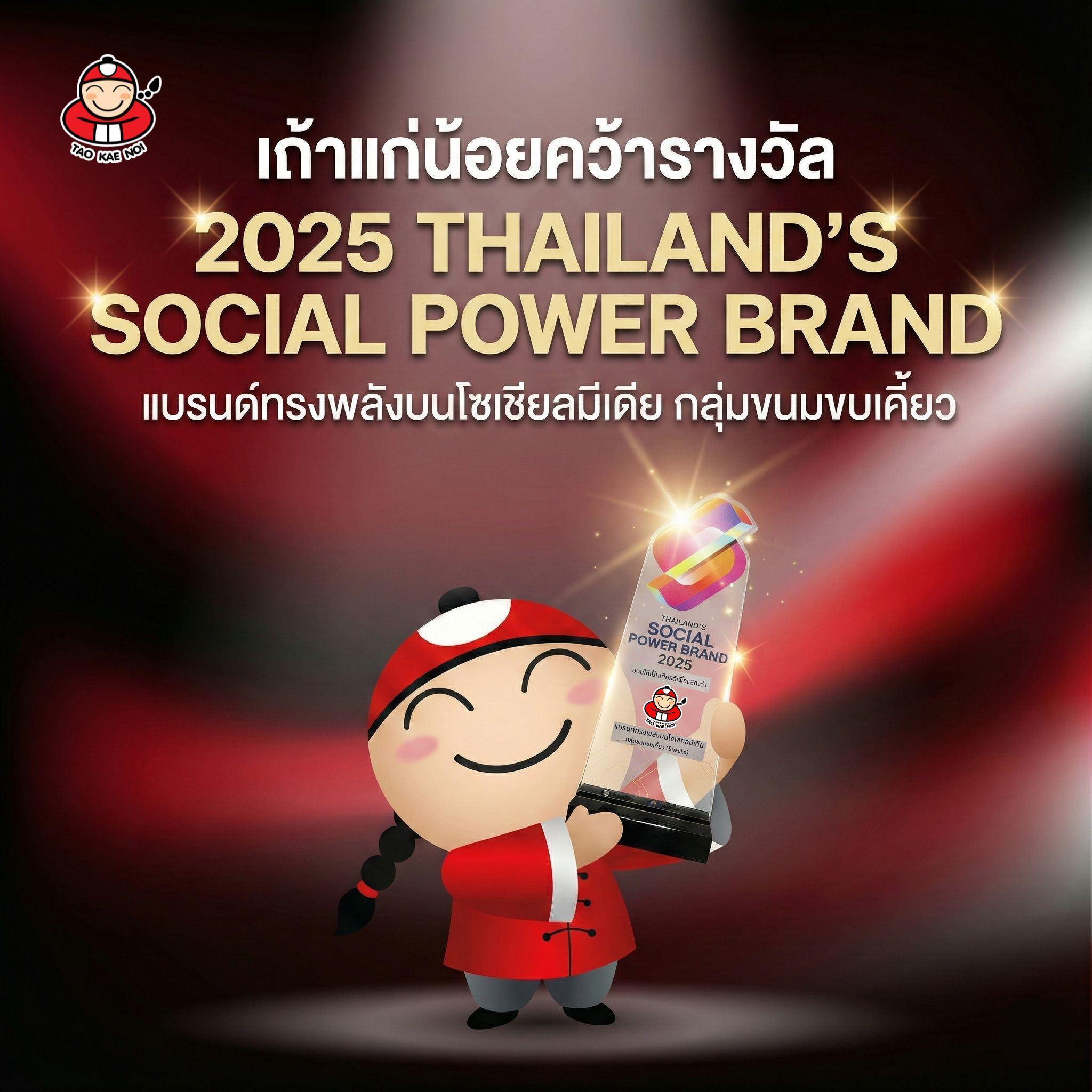
Taokaenoi Food & Marketing Public Company Limited received the “Thailand’s Social Power Brand 2025” award in the Snacks category, recognizing brands with strong influence and engagement on social media in Thailand. The ranking is organized by BrandAge in collaboration with Ocean Sky Network, using the Mandala AI Ecosystem to analyze brand communications and consumer engagement across social media platforms. The ranking covers 44 industries and is based on social media data collected during 1 July 2024 – 30 June 2025.
The award reflects the Company’s success in building strong brand awareness and consumer engagement through trend-driven digital content and marketing strategies that resonate with younger consumers.
Community & Social — Plan & Guidelines
Has a Community & Social Plan
No
Community & Social — Targets
Has Set Community & Social Targets
Yes
Targets
| Indicator | Target Areas | Base Year | Base Year — Description | Target Year | Target Year — Description |
|---|---|---|---|---|---|
| - Number of students participating in the program (Vocational Certificate level) - Number of network educational institutions - Number of students ready to integrate into the education system/society - Conversion rate (employee employment rate) | 3045 · Other name: Educational system cooperation project (Dual Vocational Education Program) creating a cooperation ne · Description: Others | 2,024 | - There are 27 students in the dual vocational education program at the Diploma level.
- There are 5 network educational institutions.
- 26 positions are ready for the education system/society.
- 0 positions are being hired as employees (Conversion Rate). | 2,025 | - There are 64 students in the dual vocational training program at the Diploma level.
- There are 11 network educational institutions.
- 62 positions are ready for integration into the education system/society.
- 1 position has been hired as a permanent employee (Conversion Rate). |
| The number of disabled employees employed under Articles 33 and 35. | 3042 · Description: Disadvantaged and vulnerable groups | 2,024 |
There are 29 disabled persons employed under Articles 33 and 35. | 2,025 | There are 28 disabled persons employed under Articles 33 and 35. |
| - 100% of organic waste (seaweed waste) that is recycled. - Number of environmental complaints and fines paid. | 3045 · Other name: Community Environment: Soil Quality Improvement Support Project for Agriculture (Project: We Use sea · Description: Others | 2,024 |
- 100% of organic waste (seaweed waste) is recycled.
- Project not yet implemented. | 2,025 | - 100% of organic waste (seaweed waste) that is recycled.
- 0 environmental complaints and fines paid. |
Community & Social — Performance & Outcomes
Has Performance Results
Yes
Performance Description
Supporting Education and Employment
Dual Vocational Education Collaboration Program
1. Strategic Objectives
Building collaborative networks:
Establish Memoranda of Understanding (MOUs) with the Office of the Vocational Education Commission (OVEC) and more than 11 leading technical and vocational colleges located near the Company’s manufacturing sites to develop a skilled talent pipeline aligned with business needs.Enhancing professional competencies:
Upgrade teaching and learning from theoretical instruction to hands-on practical experience in the workplace in accordance with vocational education standards.Developing professional trainers:
Strengthen internal personnel capabilities through the “Coach Kru” program to cultivate coaching skills and a teaching mindset, enabling quality student development.Organizational sustainability:
Prepare workforce capacity to support core and supporting functions and accommodate future business expansion.
2. Key Performance Highlights
The Company focuses on developing two core programs aligned with the food industry and technology sectors:
Engineering, Production, and Quality Assurance Skills Development Program
Scope: Covers specialized subjects including PLC systems, Machine Design, Quality Assurance (QA), and Food Safety (Pest Control for the Food Industry).
Student growth: Increased from 27 students in 2024 to 64 students in 2025.
Coach Kru development: Expanded the number of trainers from 8 to 19 (trainer-to-student ratio of 1:16) to ensure close supervision and effective mentoring.
Information Technology Skills Development Program
Curriculum: Focuses on advanced website development, SQL Server database management, and IT regulations (PDPA/Security).
Outcome: Participating students successfully completed the program, with some being offered full-time employment with the Company upon graduation.
3. Benefits and Outcomes
Job creation:
Students participating in the program decided to join the Company as full-time employees in 2024 and 2025 (with ongoing program expansion).
This initiative supports the Social (S) dimension by enhancing vocational skills and creating sustainable employment opportunities for youth, alongside strengthening Governance (G) through transparent collaboration with government agencies in compliance with legal and professional standards.
Project: “Seaweed to Soil Enrichment”
The Company emphasizes waste management under a Waste-to-Value approach by transforming leftover seaweed scraps and sludge from production processes at the Rojana and Nopphawong factories into nutrient-rich soil conditioners through fermentation and processing. These products are distributed to local farmers and community enterprises near the factories, helping reduce chemical fertilizer usage and supporting Zero Waste to Landfill practices.
Tangible Results
Zero Waste Management:
The Company successfully converted 878,609.87 kilograms of production by-products per year into soil conditioners, ensuring that no organic waste from production lines is sent to landfill.
ESG Brand Image:
This project serves as a model of Circular Economy waste management within the food industry and reflects strong corporate governance and responsibility toward all stakeholders.
Promoting Employment and Career Opportunities for Persons with Disabilities
(Sections 33 and 35) and Vulnerable/Underprivileged Groups
Policy and Implementation
The Company prioritizes reducing inequality and creating equal opportunities for vulnerable and underprivileged groups by upholding human rights principles and fair labor practices. In compliance with the Empowerment of Persons with Disabilities Act B.E. 2550 (2007), the Company supports the employment of persons with disabilities through direct employment (Section 33) and other forms of career support (Section 35), enabling persons with disabilities to earn stable incomes and achieve sustainable self-reliance.
Performance Summary (Past Two Years)
The Company has consistently maintained employment and career support for persons with disabilities in accordance with legally required ratios:
2024: 29 persons employed and supported
2025: 28 persons employed and supported
Social and Community Impact
Social (S) Dimension:
Enhances the capabilities of persons with disabilities in communities surrounding the Company’s operations, providing access to employment opportunities, improving quality of life, and reducing dependency burdens on families.
Governance (G) Dimension:
Conducts business in transparent compliance with legal requirements, demonstrating responsibility toward stakeholders at all levels.
Community Sustainability:
Support under Section 35 promotes local job creation, empowering persons with disabilities to demonstrate their abilities and actively participate in the community with pride.
The Company remains committed to continuously strengthening its ESG policies to create genuine and sustainable social value creation.
Law Violation Incidents
Law Violation Incidents
| Metric | Current Year | Previous Year | Two Years Ago |
|---|---|---|---|
| The total number of cases or incidents of significant violations of laws or regulations regarding social and human rights (Cases) | 0 | 0 | 0 |
| The total number of cases or incidents that cause significant labor disputes (Cases) | 0 | 0 | 0 |
| The total number of cases or complaints related to consumer rights violations (Cases) | 0 | 0 | 0 |
| The total number of cases or complaints related to partner rights violations (Cases) | 0 | 0 | 0 |
| The total number of cases or incidents that cause disputes with the community/society (Cases) | 0 | 0 | 0 |
| The total number of cases or incidents related to cyber security or customer data breaches (Cases) | 0 | 0 | 0 |
| The total number of cases or incidents related to safety and occupational health at work (Cases) | 0 | 0 | 0 |